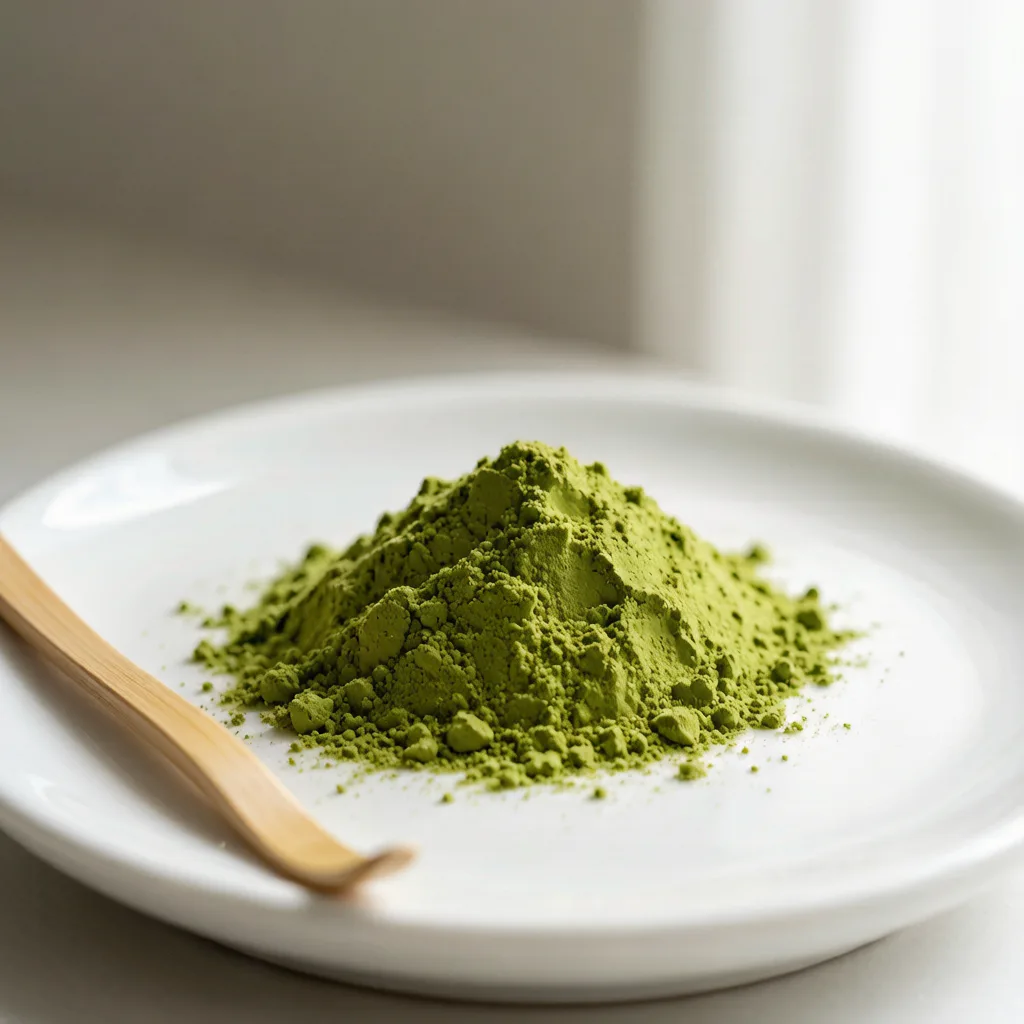
Matcha Powder β€” Chinese-Grown Β· Japanese Cultivars Β· Uji-Style Milling

Terra Matcha Powder Grades - Uji Series & A Series

Two Series, Two Approaches: the ceremonial Uji blend vs the two-cultivar A-series blend. Japanese cultivars grown in Zhejiang, China, processed with Uji-style techniques. Grade selection for every application β€” from ceremonial tea ceremony to food manufacturing.

11
Grades Across 2 Series
5+
Partner Production Lines
5,000 t
Partner Mill Capacity

Two Series, Two Approaches

Cultivars introduced from Japan, grown in Zhejiang Β· Uji-style milling. Every lot begins with leaf from contracted gardens in Zhejiang, processed with Uji-style techniques β€” from shade-growing to milling. The difference lies in how we compose the final powder.

1A Β· Industrial Color Grade

Best for: Biscuit coloring, pastry coloring, feed, natural food colorant replacement

  • Fineness: 600–800 mesh, coarse particles
  • Shading: ~12 days (mid-to-late-season mature leaves)
  • Liquor: Dark yellow-green, poor luster, oxidizes to yellow rapidly
  • Flavor: Heavy grassiness, pronounced bitterness, virtually no nori umami, weak finish
  • Foam: Almost none; settles when stirred
  • Not for: Tea ceremony (prohibited), direct beverages
  • Weakness: Noticeable grit, heavy off-notes

2A Β· Basic Culinary Grade

Best for: Mass colouring and seasoning work β€” colour and cost per kg

  • Fineness: 800–1000 mesh
  • Shading: 14 days (one bud three leaves)
  • Liquor: Yellow-green, moderate stability
  • Flavor: Pronounced grassiness, strong bitterness, slight astringency, very low umami
  • Foam: Minimal, dissipates quickly
  • Not for: Beverages, whisking
  • Weakness: Coarse on the palate, thin body

3A Β· Entry Beverage & Culinary Grade

Best for: Budget tea chains, everyday cakes, daifuku β€” light coloring & aroma

  • Fineness: 1000–1200 mesh
  • Shading: 16 days (one bud two leaves, mature-leaning)
  • Liquor: Light green, slight sheen
  • Flavor: Grassy-led with a faint bean note; clear bitterness, astringent grip, short finish
  • Foam: Thin, disappears fast β€” not suitable for whisking
  • Weakness: Insufficient umami; yellows when left in water

4A Β· Mid-Range Commercial Beverage + Simple Milk Drinks

Best for: Mid-range desserts, ice cream, standard matcha lattes β€” value-focused

  • Fineness: 1200–1300 mesh
  • Shading: 18 days (one bud two leaves)
  • Liquor: Jade green with basic luster
  • Flavor: Grassiness recedes, faint nori base emerges; medium bitterness, slight astringency, average finish
  • Foam: Thin, moderate persistence β€” does not meet whisking requirements
  • Weakness: Average umami, thin body; not for tasting

5A Β· Top Culinary / Pre-Ceremonial Threshold

Best for: Premium culinary work, mid-range cafΓ© lattes; passable simple whisking

  • Fineness: ~1300 mesh
  • Shading: 20 days (first-spring one bud two leaves)
  • Liquor: Bright jade green; oxidation resistance better than 1A–4A
  • Flavor: Nori umami clearly lifted, grassiness greatly suppressed; light bitterness, slight grip, decent finish, medium umami
  • Foam: Can produce a thin foam, but fineness and persistence below 6A+
  • Not for: Formal tea ceremony
  • Weakness: Insufficient body, foam disperses

6A Β· Ceremonial Prime

Best for: Beverage chains, milk-tea lattes, dessert bases

  • Fineness: 1300–1500 mesh
  • Shading: 22–24 days (Samidori + Maojian blend, first-spring one bud two leaves)
  • Liquor: Jade green, moderate stability
  • Flavor: Grassiness forward, slight bitterness, medium umami, average finish, faint astringency
  • Foam: Acceptable, moderate persistence
  • Not for: Formal tea ceremony
  • Weakness: Yellows over time; grassy notes run high

Uji1 Β· Light & Refreshing Entry

Best for: Beginner whisking, everyday lattes, home drinks, iced preparations

  • Fineness: 1200 mesh
  • Liquor: Fresh green
  • Flavor: Refreshing grassy aroma, light tea character, soft bitterness, medium umami, clean entry without weight
  • Foam: Entry-level foam, fine for daily thin tea
  • Flavor equivalent: β‰ˆ A-Series 6A

Uji3 Β· Vivid & Intense (Top of Uji Line)

Best for: Home tea ceremony, straight tasting, premium milk drinks; excellent baked color retention

  • Fineness: 1800 mesh
  • Liquor: Oily jade green, better oxidation resistance
  • Flavor: Intense nori umami, maximum freshness, very light bitterness, full and thick, near-zero astringency
  • Foam: Dense, thick foam; suitable for formal thin-tea whisking
  • Flavor equivalent: β‰ˆ 8A-class character
  • Weakness: Weaker oven tolerance; prolonged heat dulls aroma and shifts color
Grade Primary Use Color Bitterness Particle Size
1AColouring, industrialGoodHigh600–800 mesh
2ACulinary, chocolateGood+Medium-High800–1000 mesh
3ARTD, milk tea, ice creamVery GoodMedium1000–1200 mesh
4ACafΓ© lattes, blended drinksExcellentMedium1200–1300 mesh
5APremium lattes, specialty drinksExcellent+Low-Medium~1300 mesh
6AEntry ceremonial, premium beveragesOutstandingLow1300–1500 mesh
7ACeremonial usucha, premium latteEliteVery Low1500–2000 mesh (5–10ΞΌm)

6A can serve as entry-level ceremonial matcha β€” approaching Uji quality with the consistency of a two-cultivar blend. 6A–3A are ideal for beverage chains and blended drinks; 2A–1A are formulated for colouring, seasoning and confectionery. With our fixed-ratio two-cultivar blend, bulk supply is batch-to-batch consistent β€” no seasonal surprises.

Application Matrix

Find the right grade for your product category. Our scientific matching ensures optimal performance in every application β€” from ceremonial tea ceremony to industrial production.

Application Recommended Grades Key Requirements Note
Ceremonial Tea Ceremony Uji4, Uji3 Ultimate color, silky smooth, long sweet finish Pure whisked drinking experience β€” the Uji line for aromatic expression
Luxury Gifting / High-End Retail Uji4, Uji3, Uji2 Premium packaging appeal, a documented, repeatable flavour Batch-to-batch consistency is the differentiator buyers actually test for
Premium CafΓ© Latte Uji2, Uji1, 6A, 5A Good milk compatibility, bright color, balanced flavor Must hold flavor against milk β€” Uji for top-tier, A for chain consistency
Chain CafΓ© / Blended Drinks 6A, 5A, 4A, 3A Consistent batch quality, strong flavor, good dispersion A series blend ensures identical results across all locations
Milk Tea / Bubble Tea 4A, 3A, 2A Strong flavor, good dispersion, color stability Needs to cut through sweetness β€” chocolate bitterness helps
RTD (Ready-to-Drink) 4A, 3A Suspension stability, shelf-life color retention Industrial processing compatibility β€” blend consistency is critical
Confectionery & Colouring 2A, 1A Strong flavour, colour loading, cost per kg For no-bake fillings, coatings and dry blends. In oven baking the green fades toward brown, so we do not recommend matcha for baked goods.
Ice Cream / Frozen Desserts 3A, 2A Cold-process dispersion, creamy pairing Color must pop in dairy matrix β€” Samidori contribution shines here
Chocolate / Confectionery 2A, Uji3 Flavor synergy with cocoa, fine texture Chocolate-matcha pairing β€” theobromine in both creates depth
Industrial / Food Manufacturing 1A, 2A Bulk consistency, cost efficiency, batch specification sheet per lot Large-volume production β€” two-cultivar blend ensures uniformity

Don't see your application? Contact our team β€” we'll recommend the optimal matcha powder grade for your specific product.

Matcha Flavor Wheel β€” 7 Key Dimensions

Our grade selection is guided by seven sensory dimensions. Understanding these helps you choose the right matcha powder for your application.

1. Aroma

From fresh and grassy (Uji1) to pronounced nori (Uji2) to intense nori umami (Uji3) to deep honeyed sweetness (Uji4). Aroma is the first sensory touchpoint and a key differentiator across our Uji line β€” each grade carries its own aromatic signature. A series offers a more straightforward green tea fragrance with subtle chocolate undertones from theobromine.

2. Texture / Mouthfeel

Particle size directly governs mouthfeel. Uji series (1200–2000+ mesh) delivers silky-smooth, velvety textures β€” the hallmark of high-mesh finishing. A series ranges from smooth (6A at 1300–1500 mesh) to slightly coarser for the lower grades (1A at 600–800 mesh). Finer particles = more luxurious mouthfeel.

3. Color

Bright emerald-green to vivid jade-green. Uji4 achieves the brightest, most luminous green in the Uji range. Uji1 has the softest green in the Uji series. A series overall maintains excellent, uniform color thanks to the Samidori contribution, with 6A approaching Uji-level brightness. Note: in oven baking the green fades toward brown in both lines, so we do not recommend matcha for baked goods.

4. Sweetness

Natural sweetness comes from amino acids (primarily L-theanine). Uji4 has the highest natural sweetness with a creamy-milky character. Uji3 follows with chocolate-like sweetness. In A series, Samidori drives the umami-sweet backbone with its nori note, balanced by Maojian's fresh tender aroma and tea body for a well-rounded, moderate sweetness suitable for beverage and food formulations.

5. Umami

The savory depth that defines premium matcha. Uji4 and Uji3 deliver the richest umami experience β€” full, round, and deeply satisfying from their Uji-line expression. Uji2 has classic nori-driven umami. In A series, Samidori is the primary umami driver, delivering balanced savory depth suitable for blended applications where a clean tea presence is desired.

6. Bitterness

Controlled bitterness adds character. A series has higher theobromine content, producing a pleasant chocolate-like bitterness that works exceptionally well in lattes, milk teas, and chocolate products. Uji series bitterness is minimal β€” smooth and round. 1A has the strongest bitterness profile, ideal for cutting through rich baked goods and sweet confections.

7. Aftertaste

The lingering finish β€” a hallmark of quality matcha. Uji4 has the longest, sweetest aftertaste (umami-sweet lingering finish). Uji3 and Uji2 follow with satisfying persistence β€” the Uji-line expression shines through. A series offers a cleaner, shorter finish β€” preferred for beverages where a crisp exit is desired. 6A provides the longest aftertaste in the A series.

Specifications You Can Customize

We tailor matcha powder specs to your product requirements β€” flavor, color, texture, and compliance documentation. Whether Uji series or A series blend, we match the right specification to your market.

Flavor Profile

Choose your target taste: fresh grassy, nori, intense umami, or honeyed for the Uji series. For A series, we adjust the bitterness-to-sweetness ratio and tea intensity through our two-cultivar blend formulation to match your product. Each grade has a distinct flavor fingerprint β€” we help you select the right one.

Color Target

Specify your desired green intensity. Ceremonial grades deliver the brightest jade-green (Uji4 is our brightest). Beverage grades offer vibrant greens β€” Samidori's contribution to the A series blend ensures excellent color uniformity. Lower grades are chosen for colour loading and cost rather than heat performance. We provide colorimetry data on request.

Particle Size

From ultra-fine ceremonial (5–20ΞΌm) to coarser culinary grades (75–149ΞΌm). Finer particles give a smoother mouthfeel and better suspension; coarser particles cost less per kilo and disperse more easily in dry blends. We recommend the range that fits your application and processing method.

Quality & Safety

A batch specification sheet per lot, covering grade, mesh, colour (L*a*b*), moisture, ash, caffeine and microbiology. Pesticide-residue and heavy-metal reports are available on request for the lots that carry them, and documentation is prepared for EU and US import requirements. Organic certification: USDA NOP across the range, EU organic for Uji1 and Uji3 only. Every lot is traceable to its production record.

Packaging Options

πŸ“¦

Bulk Packaging

Multi-layer foil bags with moisture and oxygen barrier. Standard sizes: 1kg, 5kg, 10kg, 20kg. Carton-packed for export with palletization options. Nitrogen-flushed for extended shelf life. Ideal for food manufacturers and industrial buyers.

View Bulk Options
🏷️

Retail / Private Label

Tins (30g, 40g, 100g), stand-up pouches, and stick sachets (1g–3g). Full label and branding customization. Your brand, our quality. MOQ flexible based on packaging type. Design support available.

View Private Label
🎨

OEM / Custom Packaging

Custom tin shapes, pouch materials, box sets, and gift packaging. We work with your design files or can connect you with packaging partners. Full OEM service from matcha powder to finished retail product.

Explore OEM Options
🌑️

Storage & Shelf Life

All packaging is designed for optimal preservation: sealed, light-proof, moisture-resistant. Store in cool, dry conditions. Recommended storage: below 25Β°C, away from direct light and strong odors. Typical shelf life: 12–18 months unopened.

Frequently Asked Questions

What's the difference between the Uji series and the A series?

Uji series is our ceremonial blend line β€” 4 ceremonial grades (Uji1–Uji4), one fixed blend ratio per grade: Yabukita for most, Longjing #43 where a lighter floral profile is wanted. A series is the two-cultivar blend line β€” 7 professional grades (1A–7A) built from a fixed ratio of Samidori (nori umami and vivid green) and Maojian (fresh tender aroma and body). Uji offers richer umami, brighter colour and smoother texture. A series delivers lot-to-lot consistency and a chocolate-like bitterness from higher theobromine, which is why it works in beverages and food manufacturing.

Why choose the Uji series over the A series β€” or the A series over the Uji series?

Choose the Uji series (fixed blend) when you want a cleaner, more aromatic cup β€” fresh grassy, nori, intense umami or honeyed β€” for high-end tea ceremony, luxury gifting, or premium cafΓ©s where a consistent cup matters more than a single harvest. We hold the blend ratio year-round, so the cup does not swing with the season.

Choose the A-series two-cultivar blend when you need consistent, uniform quality across large volumes β€” for chain cafΓ©s, RTD production and food manufacturing. The two-cultivar blend (Samidori + Maojian) ensures every batch tastes and looks the same. The chocolate-like bitterness from theobromine also makes it particularly effective in milk-based and sweet applications.

What cultivars are used in the A series blend, and what does each contribute?

The A series is a proprietary blend of two lead cultivars from our partner gardens under our QC: Samidori (ζ—©η»Ώ), introduced from Japan, provides the nori-driven umami core and the vivid emerald colour. Maojian (ζ―›ε°–), a premium Chinese cultivar, contributes a fresh tender aroma and adds body to the cup. Together, the two complement each other to produce a uniform, stable, and versatile matcha powder.

Which matcha grade is best for my cafΓ© latte program?

For premium cafΓ© lattes, we recommend 4A, 5A, or Uji1/Uji2 depending on your positioning. 4A and 5A offer excellent milk compatibility with vibrant green color at accessible price points β€” and the two-cultivar A-series blend keeps the cup consistent across all your locations. Uji1/Uji2 deliver a more refined, ceremonial-quality latte experience for high-end cafΓ©s. 7A bridges both worlds β€” approaching Uji quality with the consistency of a fixed two-cultivar blend.

Can I use Uji series for baking or food manufacturing?

For food manufacturing we would steer you to the A series (1A–2A): stronger flavour, higher colour loading and a lower cost per kilo, with lot-to-lot consistency. But not for oven baking. Matcha colour fades toward brown under bake temperatures in both lines β€” that is a property of the pigment, not something a grade can fix. Where heat is unavoidable in a process (RTD, retort, ice cream), we work with you on grade and dosage and show you the colour data before you commit.

Do you provide a batch specification sheet and other quality documentation?

Yes. Every lot ships with a batch specification sheet: grade, mesh, colour (L*a*b*), moisture, ash, caffeine, microbiology, lot number and production date. MSDS and certificate of origin are supplied on request, and third-party heavy-metal and pesticide reports are available for the lots that carry them. Organic certificates (USDA NOP, plus EU organic for Uji1 and Uji3) come with the certified grades. Each lot is traceable to its production record.

Can I get samples before placing a bulk matcha order?

Yes. Tell us your application (ceremonial, latte, RTD, dessert, food manufacturing) and we will send the most relevant grades. Paid samples are dispatched within 3–5 working days.

What is the minimum order quantity (MOQ) for matcha powder?

MOQ varies by grade and packaging format. Bulk packaging typically starts at 5–10kg per grade. Private label and OEM orders have separate MOQ requirements based on packaging type and customization level. Contact us with your requirements for a detailed quotation.

How should I store matcha powder to maintain quality?

Store matcha powder in a sealed, light-proof container in a cool, dry environment (below 25Β°C / 77Β°F). Avoid exposure to direct sunlight, heat, moisture, and strong odors. Once opened, consume within 1–2 months for best flavor and color. Unopened, properly packaged matcha has a shelf life of 12–18 months.

Do you offer OEM / private label matcha powder?

Yes, OEM and private label are core services. We supply bulk matcha powder with your branding β€” tins, pouches, stick sachets, and gift sets. Full customization available: label design, packaging format, grade selection, and certification documentation. Contact us to discuss your brand requirements.

Why Blended Matcha Wins at Scale

Our A series is a fixed-ratio blend of two cultivars β€” Samidori (ζ—©η»Ώ) and Maojian (ζ―›ε°–). Blending is not a shortcut; it is how industrial buyers get the same cup every single time.

🎯 Batch-to-Batch Consistency

A fixed ratio means season, rainfall and harvest timing no longer move your flavour profile. Your Q4 latte tastes like your Q1 latte β€” critical for chains and RTD lines.

πŸ“‰ Cost Efficiency

Blending reaches a target flavour and colour with less of the most expensive leaf. Comparable cup quality at a lower cost per kilogram β€” and the saving scales with volume.

πŸŽ›οΈ Tunable Flavour

Bitterness-to-sweetness ratio, tea intensity and nori depth can be dialled per project. We adjust the ratio to fit your product instead of asking you to reformulate around the tea.

πŸ”₯ Honest on Heat

Matcha colour fades with heat β€” in oven baking it shifts toward brown in both lines. Where heat is unavoidable in a process (RTD, retort, ice cream), we work with you on grade and dosage and share the colour data rather than promising retention.

πŸ“¦ Supply Stability

Two cultivar sources instead of one. A poor harvest in a single garden no longer stops your production line β€” we rebalance the ratio and keep the specification intact.

πŸ§ͺ Spec Lock-In

Locked specification per grade: mesh, colour (L*a*b*), bitterness, moisture. Every shipment is measured against the same reference lot, batch after batch.

Ready to Find Your Matcha Grade?

Tell us your application β€” ceremonial, latte, RTD or food manufacturing β€” and we will recommend the grade with a quotation within 24 hours. Either series, we will match the specification to your market.

Request Samples & Specs
πŸ’¬